
Poor Things - Review

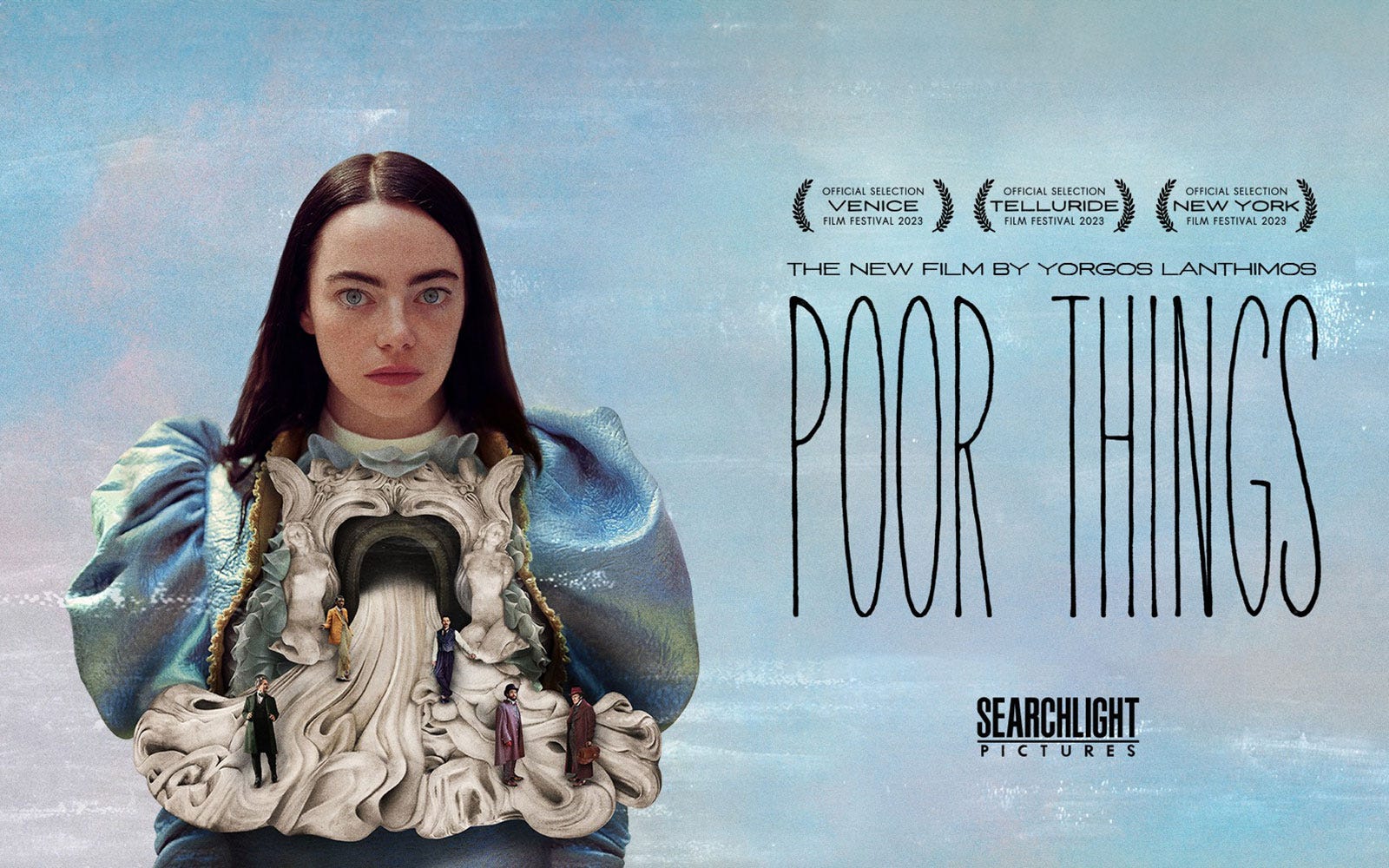
Poor Things is unfortunately a mess, but nevertheless a beautiful one. Cinematographer Robbie Ryan cited Coppola’s Dracula as an influence, resulting in this richness that you rarely see in big studio ventures. The necessary CG elements are perfectly blended with these densely detailed and constructed sets, that feel like some weird AI fever dream without ever having that gross AI sheen. The world of Poor Things was by a long way my favourite aspect of the film, creating a look that could easily be the greatest take on steampunk London and Europe ever put on film. I can't underestimate how great it looks, from the costuming, to the stunning contrast of black and white with the water colour hues that captured Bella's own naive view of a world which we are no less enthused by. It is an aesthetic triumph, complimented by the intricate but often sweeping score by Jerskin Fendrix (an artist familiar to followers of ‘the windmill scene’), who seems perfectly suited to Lanthimos’ unique, if inconsistent, atmosphere.
There is an inherently interesting premise here, establishing the dynamic of Godwin and Bella as a kind of perverse take on that of Frankenstein and his creature; God and his creation. These massive themes of creation and consent echo throughout the film (I imagine much more strongly through the novel), but it’s Lanthimos’ shallow take on female autonomy that unfortunately takes centre stage. Bella’s experiences of sex runs parallel with her lived experience and interactions with the real world, a good concept executed in such a meandering and cynical way making it hardly worth the effort. This is most apparent in the repetitive and pretentious sex comedy that makes up the second act. Full of clinically dull sex scenes and a few cheap philosophy gags, the central thesis of the film is stalled for about an hour by the moustache-twirling Duncan, played by a horribly misdirected Mark Ruffalo. I’m sure many will credit this comedic turn as one of the best parts of the film, but when paired against the real sincerity of Emma Stone’s lead, it falls embarrassingly flat. Emma Stone is, obviously, great in this, portraying the growth of Bella with remarkable subtlety and never trading it in completely for those all too familiar cheap Lanthimos laughs. It has some of the heart that The Favourite and The Lobster severely lacked, but not enough to make a story like this function properly.
I found it far from perfect but it’s not terrible, if anything it’s more frustrating than it is interesting. Throughout I was wondering what a Del Toro Poor Things could have looked like, a director who I’m sure would have no trouble honing in on the innate and integral sincerity of the source material. Fortunately there is some respite to be found in the film’s final act, which feels more in keeping with what was established in the tender opening half hour. It’s not that some of the laughs aren’t good, it’s just I feel as though they could have been better placed. I don’t think surreal comedy is as simple as just throwing an old lady off of a boat or getting Mark Ruffalo to do his best Stephen Toast impression.
Lovely review. Can’t wait to watch and discuss 🙂